
Graduation is closer than it seems. Whether you’re finishing a nursing pre-placement, wrapping up a community services diploma, or heading into the trades, your program has probably prepared you well for the technical side of your career. But there’s one credential that hiring managers across nearly every sector are still asking for when they review your resume: first aid and CPR certification. If you’re looking for Belleville First Aid training, the options are more accessible — and more affordable — than most students expect.
Why First Aid Certification Matters More Than Students Realize
It’s easy to think of first aid training as something employers in high-risk industries care about. Construction, manufacturing, healthcare — sure. But the reality is much broader than that.
In Ontario, the Occupational Health and Safety Act requires every workplace to have a minimum number of trained first aiders on shift at any given time. That requirement applies to retail stores, offices, daycares, schools, gyms, and restaurants — not just job sites. Employers across the province are actively looking for candidates who already hold a valid certification, because it means one less compliance gap to fill before their new hire starts.
For students entering competitive fields, that certification can be a genuine differentiator. It signals that you’re proactive, safety-conscious, and already workplace-ready. It’s a small credential with a disproportionately large signal.
Which First Aid Course Is Right for Belleville Students?
There are a few different certification levels, and the right one depends on where you’re headed after graduation.
- Emergency First Aid + CPR/AED Level C: The most common starting point. Covers CPR, AED use, choking, and basic emergency scene management. Takes about one day. This is the baseline certification most Ontario employers are looking for when they list “first aid certification required” in a job posting.
- Standard First Aid + CPR/AED Level C: A more comprehensive two-day course covering wound care, fractures, head and spinal injuries, and a wider range of medical emergencies. Required for many healthcare-adjacent placements, early childhood education roles, and fitness industry jobs.
- BLS (Basic Life Support): The healthcare-level CPR standard. If your Loyalist program feeds into nursing, paramedicine, dental hygiene, or any clinical field, BLS is the certification your placement coordinator will ask for.
Not sure which applies to your program? Your co-op or placement coordinator is the fastest source of that answer. Most Loyalist programs with a placement or practicum component specify the required certification level in the placement handbook.
What Does Blended Learning Actually Look Like?
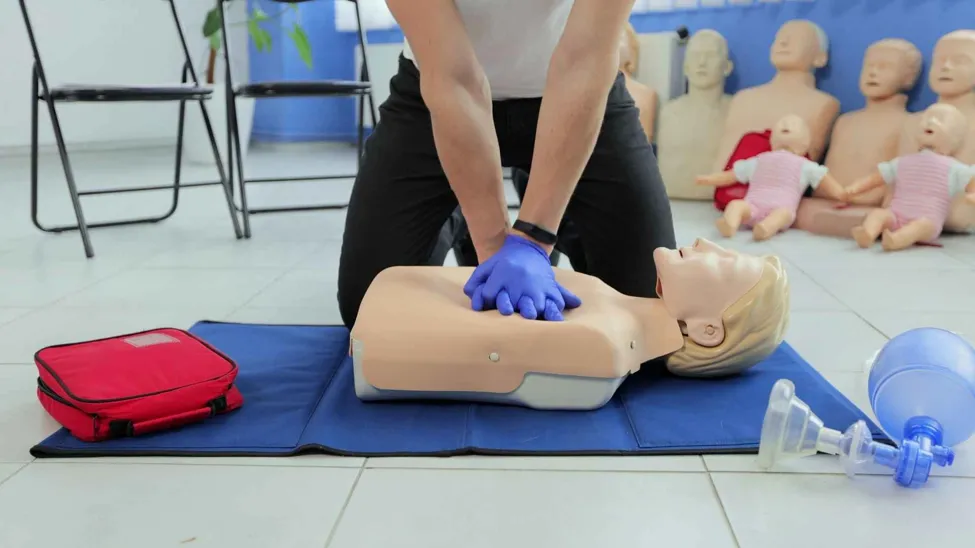
The days of sitting through an all-day classroom lecture are largely over. Modern first aid certification uses a blended learning model: you complete the theory portion online at your own pace — usually three to five hours depending on the course level — and then attend an in-person skills session to practise CPR compressions, bandaging techniques, and AED use with a certified instructor.
For a student juggling classes, part-time work, and placement applications, that flexibility is significant. You can knock out the online theory on a quiet Tuesday evening and book your in-person session for a Saturday morning. The whole process — from registration to certificate in hand — typically takes less than two weeks.
Certifications are valid for three years, which means a certification you earn in your final semester covers your entire first job — and likely your second.
Does It Count Toward Your Program Requirements?
That depends on your specific program, but first aid and CPR certification is a formal prerequisite or placement requirement in a significant number of Loyalist College programs. Health-related programs are the obvious ones, but community services, child and youth care, social services, and several trades programs also require it before students can begin their field placement.
Even if your program doesn’t mandate it, checking with your faculty advisor about whether a first aid certification could count toward any co-curricular or professional development requirements is worth the two-minute conversation.
What About the Cost? Is There a Student Option?
Standard First Aid + CPR/AED Level C courses typically run in the $100–$160 range. Emergency First Aid courses are generally lower. For students on a tight budget, a few strategies can help:
- Book as a group: Some providers offer reduced rates for group bookings of four or more — a straightforward option if a few classmates are all completing their placements around the same time.
- Check your student association: Some college student associations have negotiated discount arrangements with local training providers, or offer subsidies for professional development certifications.
- Employer reimbursement: If you have a part-time job in retail, hospitality, or any sector where employers need a certified first aider on shift, it’s worth simply asking whether they’ll cover the cost. Many will.
The Confidence Factor Nobody Talks About
There’s a dimension to first aid training that doesn’t show up on a resume but matters just as much. Emergencies are disorienting. When something goes wrong — a coworker collapses, a child chokes, a customer goes into cardiac arrest — the difference between a trained responder and an untrained bystander isn’t just knowledge. It’s the muscle memory and calm that comes from having practised the steps.
That confidence is transferable. Students who’ve completed first aid training consistently report feeling more prepared to handle high-pressure situations in their professional lives generally — not just medical emergencies. It’s a form of composure training as much as a safety skill.
For Belleville students ready to take that step, Coast2Coast First Aid & Aquatics is a Canadian Red Cross and Heart & Stroke authorized training partner offering Emergency First Aid, Standard First Aid, CPR/AED Level C, and BLS certification courses, with flexible scheduling and blended learning delivery.
When Should You Book?
The short answer: earlier than you think you need to. Certification courses fill up in the weeks before placement season, and last-minute bookings often mean waiting until after your placement start date — which creates compliance issues for both you and your placement host.
A good rule of thumb is to book your course at least four to six weeks before your placement begins. That gives you time to complete the online theory, attend the in-person session, and receive your certificate before your first day on site.
If you are looking for first aid and CPR certification training near North Front Street, the College Street West corridor, or the Loyalist College campus area, you may reach out to Coast2Coast First Aid & Aquatics in that area.
FAQs
Q: Do Loyalist College students get a discount on first aid certification courses? A: Some training providers offer group booking rates, and certain student associations have negotiated professional development discounts with local providers. It’s also worth checking with your part-time employer, as many Ontario businesses will reimburse or cover the cost of first aid certification for staff members they need on their compliance roster.
Q: Is a first aid certificate from any provider accepted for Loyalist College placements? A: Most Loyalist programs with placement requirements specify that certification must come from an authorized Canadian Red Cross or Heart & Stroke Training Partner. Always confirm the accepted provider with your placement coordinator before booking, as certifications from non-authorized providers may not satisfy your program’s requirements.
Q: How long is a first aid and CPR certification valid in Ontario? A: Standard First Aid and Emergency First Aid certifications bundled with CPR/AED Level C are valid for three years in Ontario. BLS certifications are typically renewed annually. Renewing at least a few weeks before expiry avoids any gap in certification coverage during placement or employment.
Q: Can I complete the first aid course entirely online? A: The theory component can be completed online through blended learning, which typically takes three to five hours depending on the course level. However, an in-person skills evaluation session is required to receive a valid certification. This hands-on component cannot be waived, as it is required under the standards set by Canadian Red Cross and Heart & Stroke.
Q: Which first aid certification level does Ontario OHSA require for workplaces? A: Under Ontario Regulation 1101, the required certification level depends on workforce size and workplace hazard classification. Emergency First Aid covers most lower-hazard environments with fewer than 15 workers per shift, while Standard First Aid is required for larger teams or higher-hazard settings. Your employer or placement host can confirm which level applies to their specific workplace.