
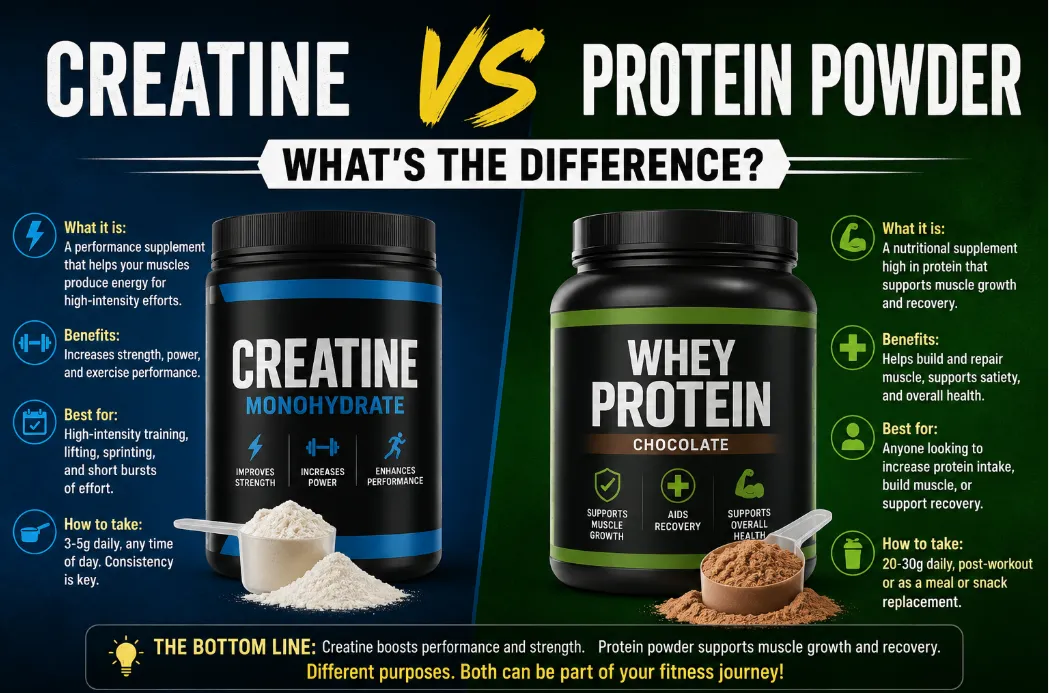
If you’re new to fitness supplements, you’ve probably come across two of the most popular products on the market: creatine and protein powder. Both are widely used by athletes, bodybuilders, and fitness enthusiasts, but many beginners wonder:
Should I take creatine or protein powder?
Do they do the same thing?
Which one is better for muscle growth?
The truth is that creatine and protein powder serve completely different purposes. While both can support fitness goals,QUOR they work through different mechanisms and provide unique benefits.
In this guide, we’ll compare creatine vs protein powder, explain how each supplement works, discuss their benefits, and help you determine which option may be best for your goals.
What Is Creatine?
Creatine is a naturally occurring compound found in muscle cells. It is produced by the body from three amino acids:
-
Arginine
-
Glycine
-
Methionine
Creatine is also found naturally in foods such as:
-
Beef
-
Pork
-
Salmon
-
Tuna
-
Herring
Approximately 95% of the body’s creatine is stored in skeletal muscles.
Its primary role is to help regenerate adenosine triphosphate (ATP), which serves as the body’s main energy source during short bursts of intense exercise.
Because of this function, creatine is commonly used to support:
-
Strength
-
Power
-
Athletic performance
-
High-intensity training
-
Muscle-building efforts
What Is Protein Powder?
Protein powder is a dietary supplement designed to increase protein intake.
Protein is one of the essential macronutrients required for:
-
Muscle repair
-
Muscle growth
-
Recovery
-
Enzyme production
-
Hormone production
-
Overall health
Protein powders are typically derived from sources such as:
Whey Protein
One of the most popular options due to its high amino acid content.
Casein Protein
A slower-digesting milk protein.
Plant-Based Proteins
Including:
-
Pea protein
-
Rice protein
-
Hemp protein
-
Soy protein
Protein powder is primarily used to help individuals meet their daily protein requirements.
Creatine vs Protein Powder: The Main Difference
The biggest difference is simple:
Creatine Supports Energy Production
Creatine helps muscles produce energy during intense exercise.
Protein Supports Muscle Repair and Growth
Protein provides the building blocks required to repair and build muscle tissue.
In other words:
-
Creatine helps you perform.
-
Protein helps you recover and grow.
Both are valuable, but they serve different functions.
How Creatine Works
Inside muscle tissue, creatine is stored as phosphocreatine.
During intense exercise:
-
ATP is rapidly used for energy.
-
Phosphocreatine helps regenerate ATP.
-
Muscles maintain performance for longer periods.
This process helps support:
-
Strength output
-
Power production
-
Training volume
-
Exercise performance
Because of this mechanism, creatine is especially beneficial for activities such as:
-
Weightlifting
-
Sprinting
-
HIIT workouts
-
Explosive sports
How Protein Powder Works
Exercise creates stress within muscle fibers.
After training, the body requires amino acids to repair and rebuild these tissues.
Protein powder provides:
-
Essential amino acids
-
Branched-chain amino acids (BCAAs)
-
Nutritional support for recovery
Meeting protein requirements is crucial for:
-
Muscle growth
-
Recovery
-
Strength development
-
Overall athletic performance
Benefits of Creatine
Research consistently supports creatine for several performance-related benefits.
Increased Strength
Creatine helps support higher force production during training.
Improved Power Output
Particularly beneficial for explosive movements.
Enhanced Exercise Performance
Supports repeated high-intensity efforts.
Muscle Growth Support
Improved training capacity may contribute to greater muscle-building potential over time.
Extensive Research Support
Creatine monohydrate remains one of the most studied supplements available.
Benefits of Protein Powder
Protein powder offers a different set of advantages.
Supports Muscle Recovery
Provides amino acids needed for tissue repair.
Helps Meet Daily Protein Goals
Especially useful for active individuals.
Convenient Nutrition
Offers a simple way to increase protein intake.
Supports Muscle Growth
Adequate protein intake is essential for building muscle.
Flexible Usage
Can be consumed:
-
After workouts
-
Between meals
-
With breakfast
-
Before bed
Creatine vs Protein Powder for Muscle Growth
Many people assume one supplement is better than the other for building muscle.
The reality is that both contribute in different ways.
Creatine
Supports:
-
Training performance
-
Strength gains
-
Workout capacity
Protein
Supports:
-
Muscle repair
-
Muscle protein synthesis
-
Recovery
For optimal muscle-building results, many athletes use both supplements together.
Creatine vs Protein Powder for Strength
If your primary goal is increasing strength, creatine generally has a more direct effect.
Why?
Because creatine helps support ATP regeneration and high-intensity performance.
This can improve:
-
Weightlifting performance
-
Power output
-
Strength development
Protein remains important, but its role is primarily recovery-related.
Creatine vs Protein Powder for Weight Loss
Neither supplement directly causes weight loss.
However:
Protein Powder
May help support:
-
Satiety
-
Muscle preservation
-
Nutritional goals
Creatine
May help maintain:
-
Strength
-
Performance
-
Lean muscle mass
during calorie-restricted periods.
Can You Take Creatine and Protein Together?
Absolutely.
In fact, many athletes combine both supplements.
Common approaches include:
Post-Workout Shake
Protein powder plus creatine mixed together.
Separate Supplementation
Protein at one time of day and creatine at another.
Both methods can be effective.
Because they serve different functions, there is no reason to choose one over the other if both fit your goals.
Which Is Better for Beginners?
The answer depends on your situation.
Choose Protein Powder If:
You struggle to meet daily protein requirements through food alone.
Choose Creatine If:
You want to improve:
-
Strength
-
Power
-
Workout performance
Use Both If:
You want comprehensive support for:
-
Recovery
-
Strength
-
Muscle growth
-
Athletic performance
Many beginners benefit from incorporating both supplements.
Dosage Recommendations
Creatine
Most research supports:
3–5 grams daily
Creatine monohydrate remains the most recommended form.
Protein Powder
Protein requirements vary based on:
-
Body weight
-
Activity level
-
Goals
Many active individuals aim for approximately:
1.4–2.2 grams of protein per kilogram of body weight per day
Protein powder simply helps contribute toward this target.
Side-by-Side Comparison
|
Feature |
Creatine |
Protein Powder |
|
Main Purpose |
Energy Production |
Muscle Recovery |
|
Supports Strength |
Yes |
Indirectly |
|
Supports Recovery |
Limited |
Yes |
|
Supports Muscle Growth |
Yes |
Yes |
|
Daily Requirement |
3–5g |
Varies |
|
Found Naturally In |
Meat and Fish |
Dairy and Plants |
|
Best For |
Performance |
Recovery and Nutrition |
Frequently Asked Questions
Is Creatine Better Than Protein Powder?
Neither is inherently better. They serve different purposes and often work best together.
Can I Build Muscle With Just Creatine?
Muscle growth requires adequate protein intake, training, and nutrition. Creatine alone is not a substitute for protein.
Can I Take Creatine Without Protein Powder?
Yes. Many individuals obtain sufficient protein through whole foods.
Should Beginners Take Creatine or Protein?
The answer depends on dietary habits and goals. Many beginners ultimately benefit from both.
Can Creatine Replace Protein Powder?
No. Creatine and protein perform entirely different functions within the body.
Final Thoughts
When comparing creatine vs protein powder, it’s important to understand that these supplements are not competitors—they are complements. Creatine helps support energy production, strength, power, and workout performance, while protein powder provides the amino acids necessary for muscle repair, recovery, and growth.
For individuals focused on building muscle, improving athletic performance, and supporting recovery, using both supplements can be an effective strategy. Creatine helps you perform better during training, while protein helps your body recover and adapt afterward.
Ultimately, the best choice depends on your goals, nutritional needs, and training program. In many cases, combining creatine and protein powder offers the most comprehensive support for long-term fitness success.